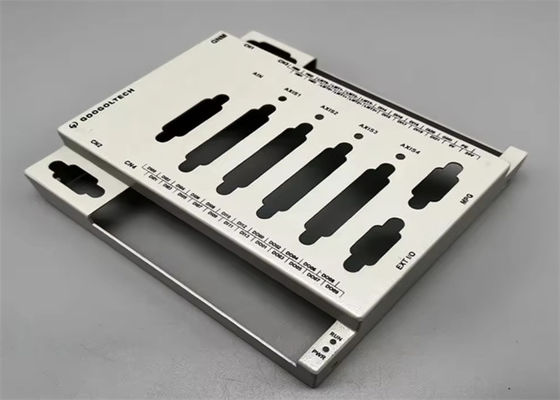
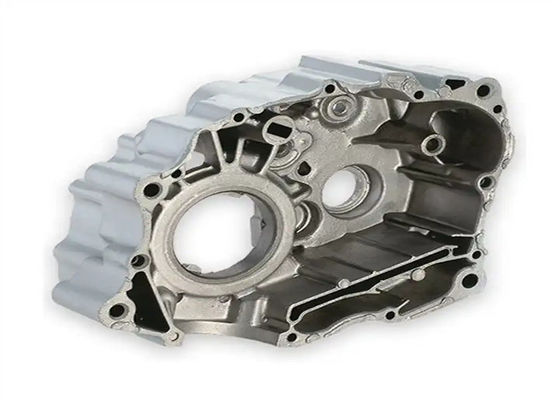
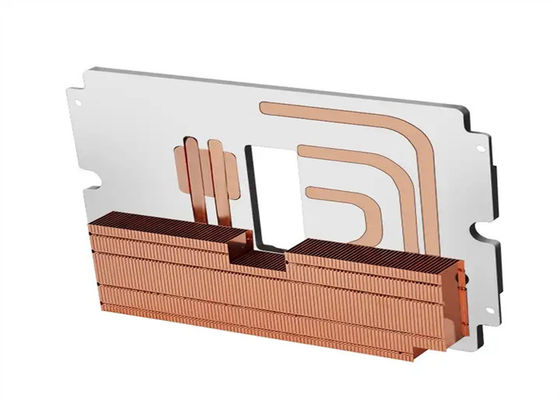
In the landscape of contemporary industrial manufacturing, engineers continually seek a delicate balance: how to maximize structural performance and precision while optimizing cost structures and production cycles. As high-end manufacturing sectors—including aerospace, medical devices, robotics, and new energy vehicles—experience rapid advancement, traditional single-process approaches struggle to meet increasingly stringent engineering demands. The deep integration of aluminum extrusion and CNC (Computer Numerical Control) machining has emerged as a technological revolution in precision manufacturing. This is not merely the combination of two processes, but rather a sophisticated interplay of materials science, dynamics, and manufacturing efficiency.
I. Complementary Logic: From Rough Stock to Refined Product
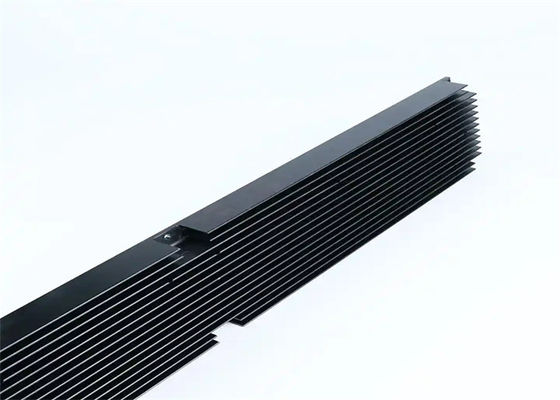
The core advantage of aluminum extrusion lies in its exceptional cross-sectional forming capability. By forcing heated aluminum billets through dies, manufacturers can efficiently produce long profiles with specific geometries. This process demonstrates unparalleled cost efficiency for structural components—it creates complex elongated structures in a single operation while minimizing material waste. However, extrusion has inherent limitations: due to the involvement of high temperatures and material flow, dimensional tolerances often fall short of precision mechanical requirements, and the process cannot directly produce high-accuracy holes, intricate internal cavities, or ultra-fine surface features.
This is where CNC machining becomes indispensable. Secondary machining transforms extruded profiles into precision components that meet rigorous industrial standards. The underlying logic of this "extrude first, machine later" approach is clear: extrusion handles material quantity, while CNC ensures quality. This synergy not only reduces raw material cutting time and tool wear but, more crucially, locks critical tolerances within ±0.01mm or tighter—enabling exceptional performance under complex operating conditions.
II. Optimizing Manufacturing: Three Critical Phases
To achieve seamless integration between extrusion and CNC machining, manufacturers must adopt a holistic approach that begins at the design stage.
1. Design for Manufacturability (DFM) Analysis
Early-stage DFM analysis is essential for cost reduction and yield improvement. Engineers must evaluate wall thickness uniformity in extruded parts—uneven walls can lead to uncontrolled deformation during CNC machining due to stress relief. By identifying potential stress concentration points and adjusting fillet radii and rib distribution during design, manufacturers can significantly reduce scrap rates. For example, optimizing die runner design ensures more uniform material density distribution, providing a stable foundation for subsequent CNC milling.
2. Precision Fixturing and Workholding
Extruded parts are prone to micro-distortions from stress relief after cutting and machining. Advanced 3-, 4-, and 5-axis CNC centers paired with custom fixtures address this challenge. Bespoke fixtures provide exceptional positioning accuracy while balancing machining stresses through multi-point support. For long-profile machining, multi-axis synchronization is critical for maintaining coaxiality in complex curves and hole patterns. Intelligent fixture design enables micron-level repeatability, even for geometrically intricate extrusions across multiple setups.
3. Rigorous Quality Assurance
From alloy selection to final inspection, ISO 9001:2015 quality systems form the foundation of consistency. In precision manufacturing, inspection isn't just an endpoint—it's integral to the process. Real-time monitoring of critical dimensions with coordinate measuring machines (CMM) ensures compliance with aerospace, medical, or robotics standards. Additional tests—surface roughness measurement, hardness verification, and environment-specific fatigue testing—create a closed-loop quality system that guarantees reliability under extreme conditions.
III. Market Responsiveness: Digital-Driven Manufacturing Flexibility
The rapid pace of modern manufacturing demands exceptional adaptability. Whether for rapid prototyping or low-volume production, flexibility has become a competitive differentiator.
Digital workflows enable seamless transition from CAD models to CNC programs. Smart scheduling systems facilitate efficient production changes without minimum order quantity (MOQ) constraints. For urgent requests, optimized process routes can compress lead times from weeks to 3–5 days—now standard in high-precision manufacturing. This agility not only accelerates time-to-market but also mitigates inventory risks, providing stability in volatile market environments.
IV. Why This Integration Represents the Future
In aerospace, the extrusion-CNC combination is widely used for airframe structures, seat rails, and cabin components. These parts require exceptional strength-to-weight ratios alongside complex connection interfaces. Extrusion provides structural integrity, while CNC ensures installation precision through accurately milled holes and slots—reducing weight while improving assembly efficiency.
Medical applications, such as surgical robots or imaging equipment supports, demand biocompatibility and structural stability. Extruded components undergo specialized surface treatments (e.g., anodization) before CNC creates precision mating surfaces—ensuring both cleanliness and mechanical accuracy.
In robotics, aluminum profiles form arm structures, with CNC machining creating servo mounts, sensor holes, and cable channels. This integration enables lighter, faster, and more precise robotic movements.
V. Conclusion: The Path to High-Performance Manufacturing
The aluminum extrusion-CNC synergy leverages dual advantages of materials science and mechanical dynamics. Through thoughtful process planning, rigorous quality control, and forward-looking engineering, manufacturers can significantly reduce costs while enhancing structural integrity and functional integration. This convergence isn't just a technical choice—it's a strategic differentiator in product competitiveness.
In precision manufacturing's evolution, the translation of design concepts into high-performance industrial components remains paramount. As AI-assisted design and smart manufacturing technologies advance, the extrusion-CNC partnership will deepen, pushing efficiency and accuracy to unprecedented levels. This represents not just industrial progress, but the perfect choreography of human ingenuity and mechanical precision at microscopic scales.

 Your message must be between 20-3,000 characters!